Through the Zone
In Andrei Tarkovsky's Stalker (1979), spatial imagery crafts a profound ethical interrogation of human existence, with water, ruins, and thresholds forming a triadic symbolism that transcends mere aesthetics. Adapted loosely from the Strugatsky brothers' Roadside Picnic, the film depicts the Zone, a forbidden and mutable territory born from catastrophe, as a living entity demanding reverence.
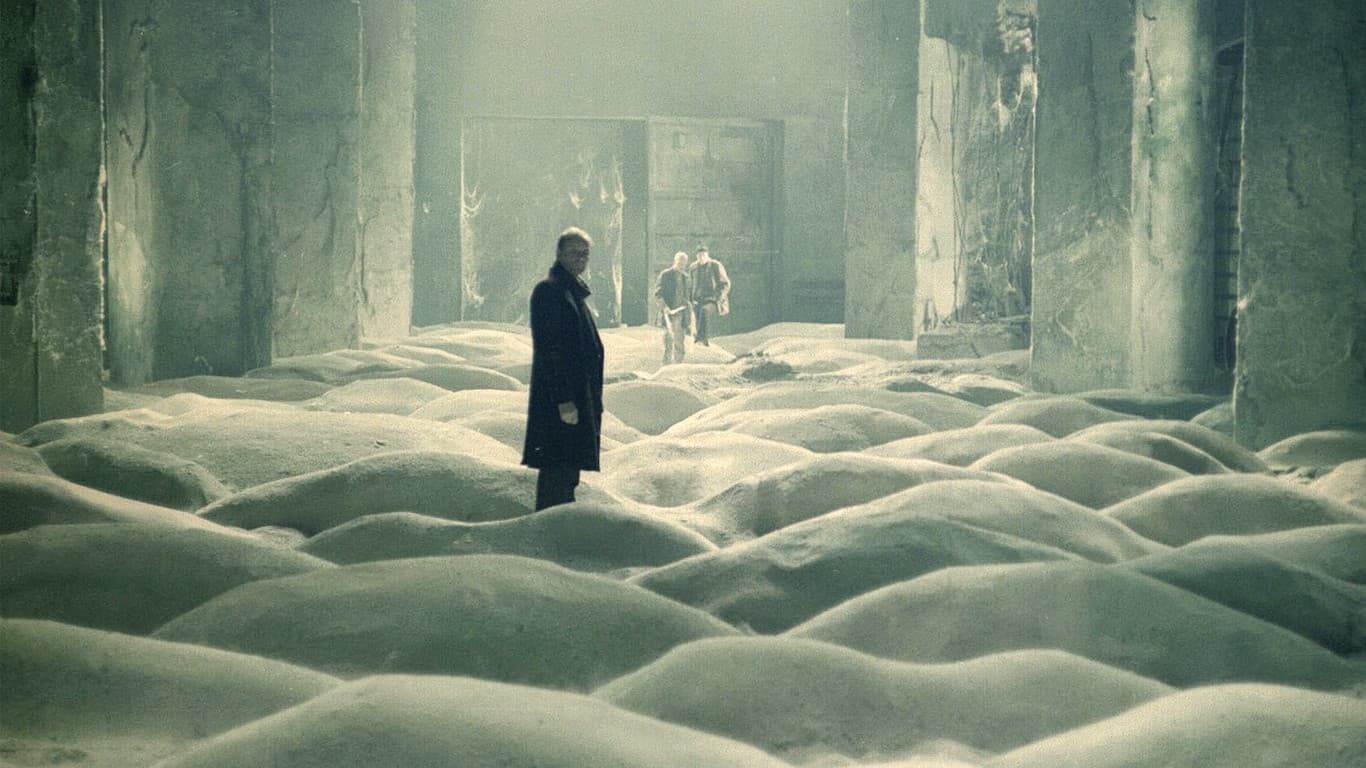
This space, neither fully natural nor artificial, exposes characters' (and viewers') ethical cores: the Stalker's selfless faith, the Writer's cynical individualism, and the Scientist's rational fear. Tarkovsky insisted the Zone "doesn't symbolize anything... the Zone is the Zone," yet its imagery invites ethical scrutiny of desire, authenticity, and coexistence with the nonhuman.
Mirror and Baptism
Water recurs as a tactile, auditory motif: puddles reflecting decayed metal, floods in the "Meat Grinder" tunnel, inexplicable rain in the Room. It embodies fluidity between life and death, purity and corruption. Tarkovsky viewed water as memory's vessel, rippling with human presence to reveal submerged truths: "Water is a reflection... it reflects the struggles and trepidations" characters face. In the well scene, waves precede a stone's impact, inverting causality and undermining scientific "cast iron laws," ethically challenging viewers to embrace intuition over determinism.
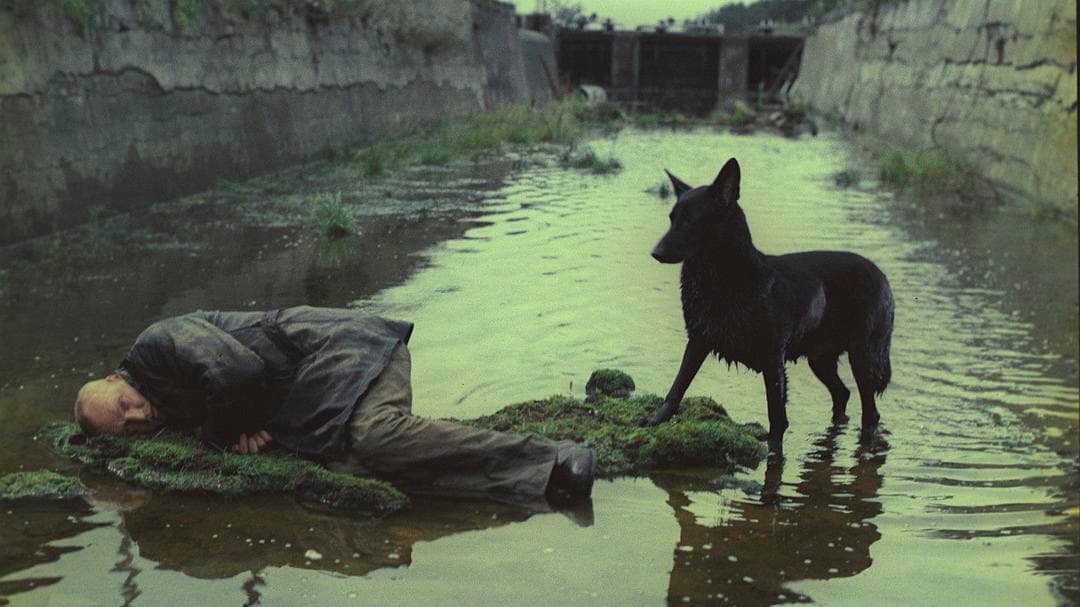
Ethically, water signifies baptismal trial: the Stalker wades through it humbly, while others hesitate, symbolizing purification's demand for selflessness. It evokes the subconscious, where true wishes lurk ("not what you holler... but what's in line with your essence"), forcing confrontation with moral imperfection. As Truppin notes, its sounds hint at "transcendent, unlocatable space," urging ethical transcendence beyond materialism.
Hauntological Remnants
The Zone's landscape, with its rusted tanks, abandoned vehicles, and skeletal buildings overgrown with moss, constitutes a "ruin porn" tableau of Soviet era stagnation and Anthropocene hubris. These relics, partially submerged, embody hauntology: spectral traces of aborted futures, where "ghosts... are traces of a repressed past and promised but aborted future." Ruins critique ethical lapses in conquest, as the Stalker laments: "Everyone thought someone wanted to conquer us."
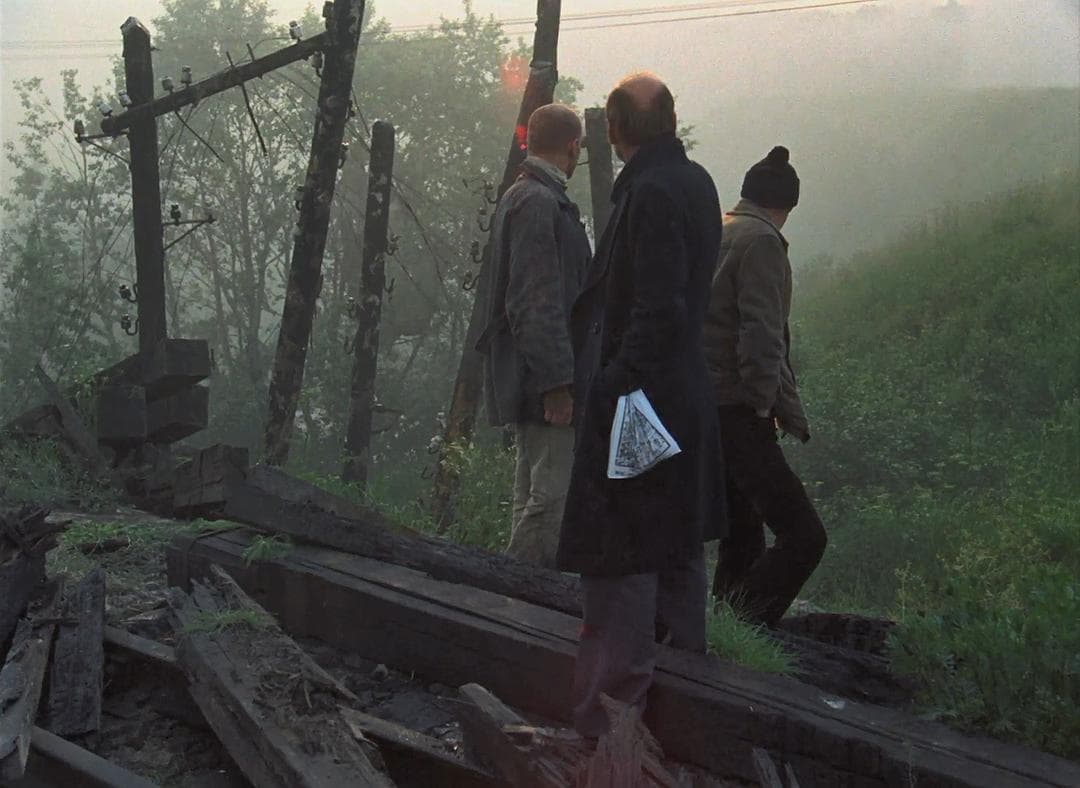
Philosophically, they signal modernity's collapse, demanding responsibility for ecological and spiritual decay. In hauntological terms, ruins disrupt linear time, ethically obliging remembrance of the marginalized Other amid progress's debris.
Liminal Choice
Thresholds abound: barbed wire perimeters, looping tunnels, the Room's doorway. These are liminal "betwixt and between" zones per Turner, suspending norms for transformation. Paths shift, demanding "respect otherwise it punishes," testing faith: straight lines loop, safe routes vanish.
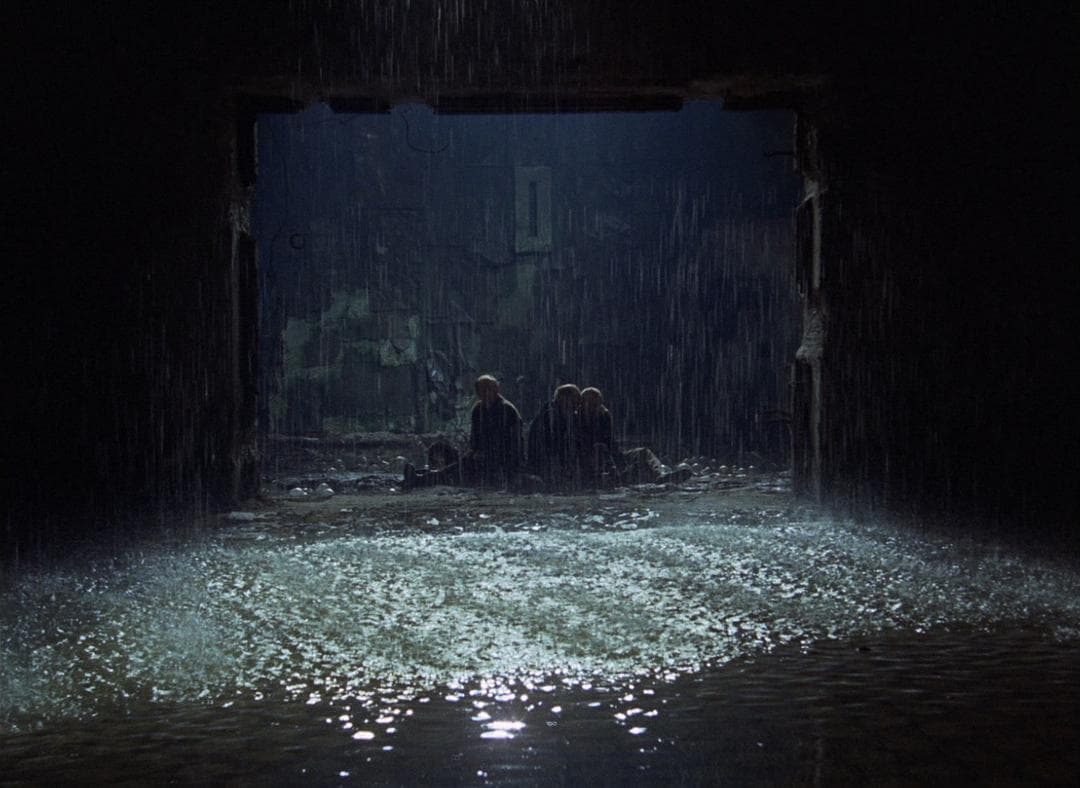
Ethically, these spaces expose inauthenticity. Writer and Scientist balk at the Room, revealing Heideggerian guilt, while the Stalker's devotion affirms dignity: "My happiness... is here! For I lead... unhappy ones." Liminality fosters "vital subjectivity": suspended reality, performativity, bisociation of worlds, ethically ambivalent yet transformative.
Moral Crucible
Three spatial elements anchor Tarkovsky's ethical vision. Water, manifested in puddles, floods, well ripples, and Room rain, evokes memory, baptism, and subconscious duality, demanding humility and confronting viewers with their true, often corrupt desires. Ruins, including tanks, debris overgrown with greenery, and submerged artifacts, embody hauntology, materialism's decay, and aborted futures, compelling accountability for hubris and remembrance of failures. Thresholds, such as barbed wire, tunnels, and the Room doorway, create liminal suspension and mutable paths, testing faith and authenticity while forcing a choice between selflessness and fear.
Tarkovsky's synthesis ethically posits the Zone as moral crucible: spatial imagery reveals human fragility, advocating love's "miracle" amid hopelessness. Controversies persist between literal and allegorical readings, but evidence leans toward ethical phenomenology, where space acts, demanding responsive coexistence.